Data Governance in 2026: Why Clean Data Matters More Than Ever
By JPStechsolutions
Introduction
Data is the foundation of every modern business decision.
From dashboards and business intelligence to compliance reporting and strategic planning, organizations rely on data every day. Yet, despite massive investments in analytics platforms and cloud data systems, many enterprises continue to struggle with one fundamental issue:
Their data cannot be trusted.
Inconsistent reports, duplicate records, unclear ownership, and regulatory exposure have made poor data quality one of the biggest business risks heading into 2026.
This is why Data Governance has moved from a back-office IT concern to a board-level priority. In 2026, clean, trusted, and well-governed data is no longer a “nice to have”—it is essential for operational efficiency, regulatory compliance, and competitive advantage.
What Is Data Governance?
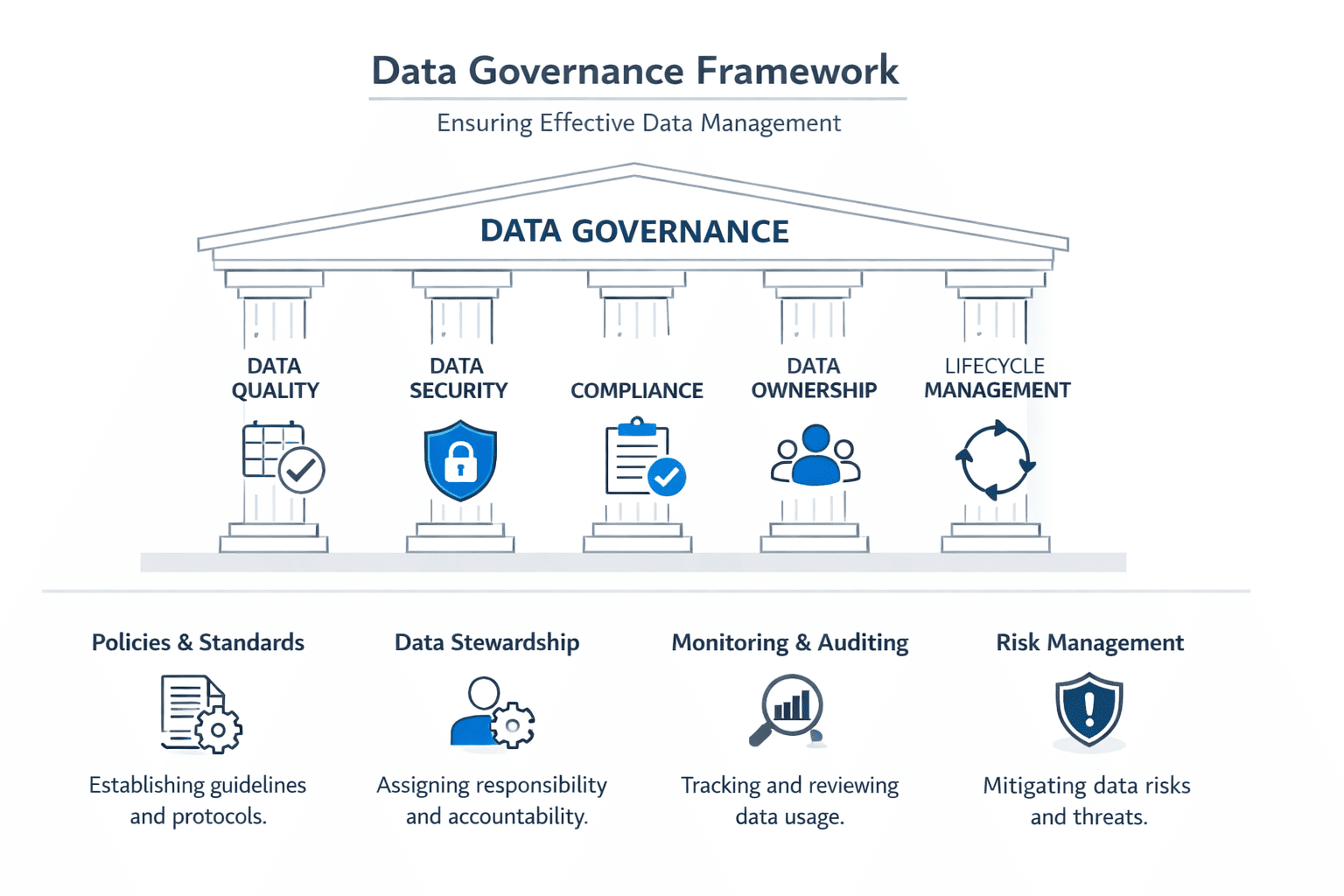
Data Governance is a set of processes, roles, policies, and standards that ensure data is:
Accurate
Consistent
Secure
Accessible
Compliant
It defines who owns data, how it is managed, how quality is maintained, and how compliance is enforced across the organization.
In simple terms:
Data governance ensures the right people use the right data, the right way, at the right time.
Why Data Governance Becomes Critical in 2026
1. Data Volumes Are Exploding
Cloud platforms, SaaS tools, IoT systems, and digital channels are generating data at unprecedented scale—often faster than organizations can manage.
2. BI & Analytics Depend on Trustworthy Data
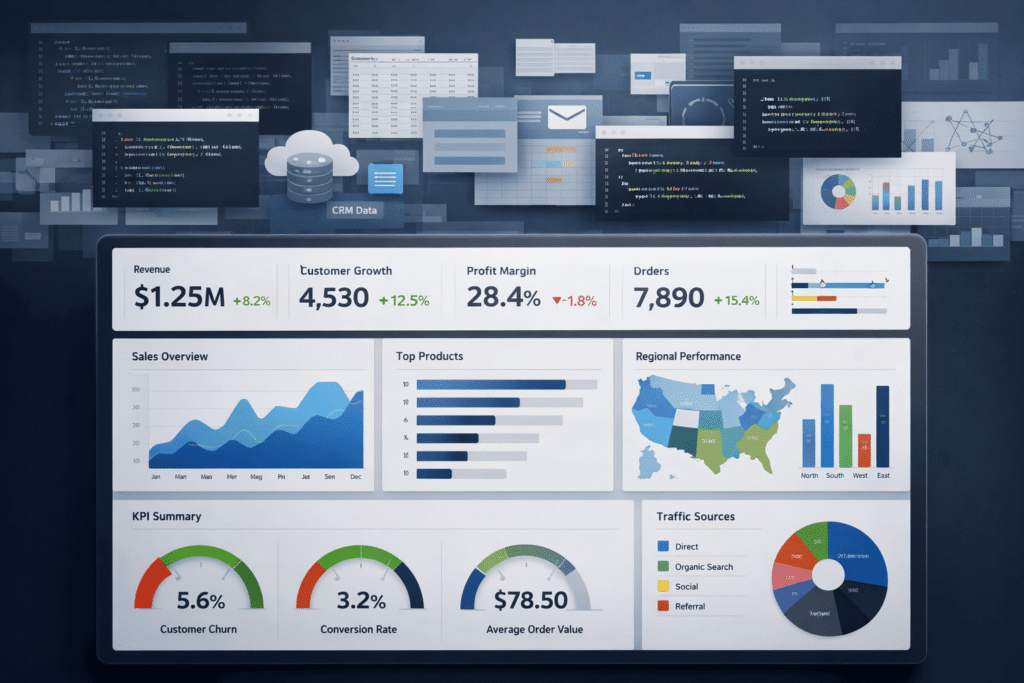
Business intelligence is only as good as the data behind it. Poor data quality leads to:
Conflicting dashboards
Incorrect insights
Loss of confidence in analytics
3. Compliance Requirements Are Increasing
Regulations such as:
GDPR
CCPA
India DPDP Act
Industry-specific data rules
require clear data ownership, traceability, and audit readiness.
4. Decentralized Data Environments
Modern enterprises operate across:
Data lakes
Warehouses
SaaS platforms
Third-party integrations
Without governance, data becomes fragmented and unreliable.
Core Pillars of Effective Data Governance
1. Data Ownership & Stewardship
Clear accountability for data domains—who owns, maintains, and approves data usage.
2. Data Quality Management
Rules and controls to ensure accuracy, completeness, and consistency across systems.
3. Data Security & Privacy
Protecting sensitive data through access controls, encryption, and monitoring.
4. Metadata & Cataloging
Understanding where data comes from, how it’s used, and what it means.
5. Policies & Standards
Common definitions, formats, and processes across teams and platforms.
Common Data Challenges Enterprises Face
Challenge
Business Impact
Inconsistent data definitions
Conflicting reports
Duplicate or outdated data
Poor decisions
No data ownership
Accountability gaps
Manual data corrections
Operational inefficiency
Compliance risks
Legal & financial exposure
Without governance, organizations spend more time fixing data than using it.
Benefits of Strong Data Governance
✔ Reliable business intelligence and reporting ✔ Faster, more confident decision-making ✔ Reduced compliance and audit risks ✔ Improved collaboration between business and IT ✔ Lower operational costs caused by rework ✔ Higher trust in enterprise data assets
In 2026, data governance becomes a business enabler, not a blocker.
How Organizations Should Approach Data Governance in 2026
1. Treat Data as a Business Asset
Assign ownership just like finance or operations.
2. Start With High-Impact Data Domains
Customer, financial, operational, and regulatory data first.
3. Establish Clear Policies & Standards
Simple, practical rules that teams can follow.
4. Enable Data Quality Monitoring
Detect issues early instead of fixing them later.
5. Align Governance With BI & Analytics
Governance should support insights—not slow them down.
The Future of Data Governance
By 2026 and beyond:
Data governance will be embedded into data platforms
Data quality metrics will be tracked like financial KPIs
Business users will actively participate in governance
Compliance reporting will become automated
Trust in data will define analytics success
Organizations that invest in governance today will unlock the full value of their data tomorrow.
Conclusion
In an increasingly data-driven world, clean and trusted data is a competitive advantage.
Data governance in 2026 is not about control—it is about confidence. Confidence in analytics. Confidence in compliance. Confidence in decision-making.
At JPS Tech Solutions, we help organizations design and implement practical data governance frameworks that support BI, analytics, and regulatory needs—without slowing innovation.
👉 Ready to build a data governance strategy that scales with your business? Talk to our experts today.