Quantum Computing in 2025: The Next Tech Revolution Businesses Cannot Ignore
By JPStechsolutions
Introduction
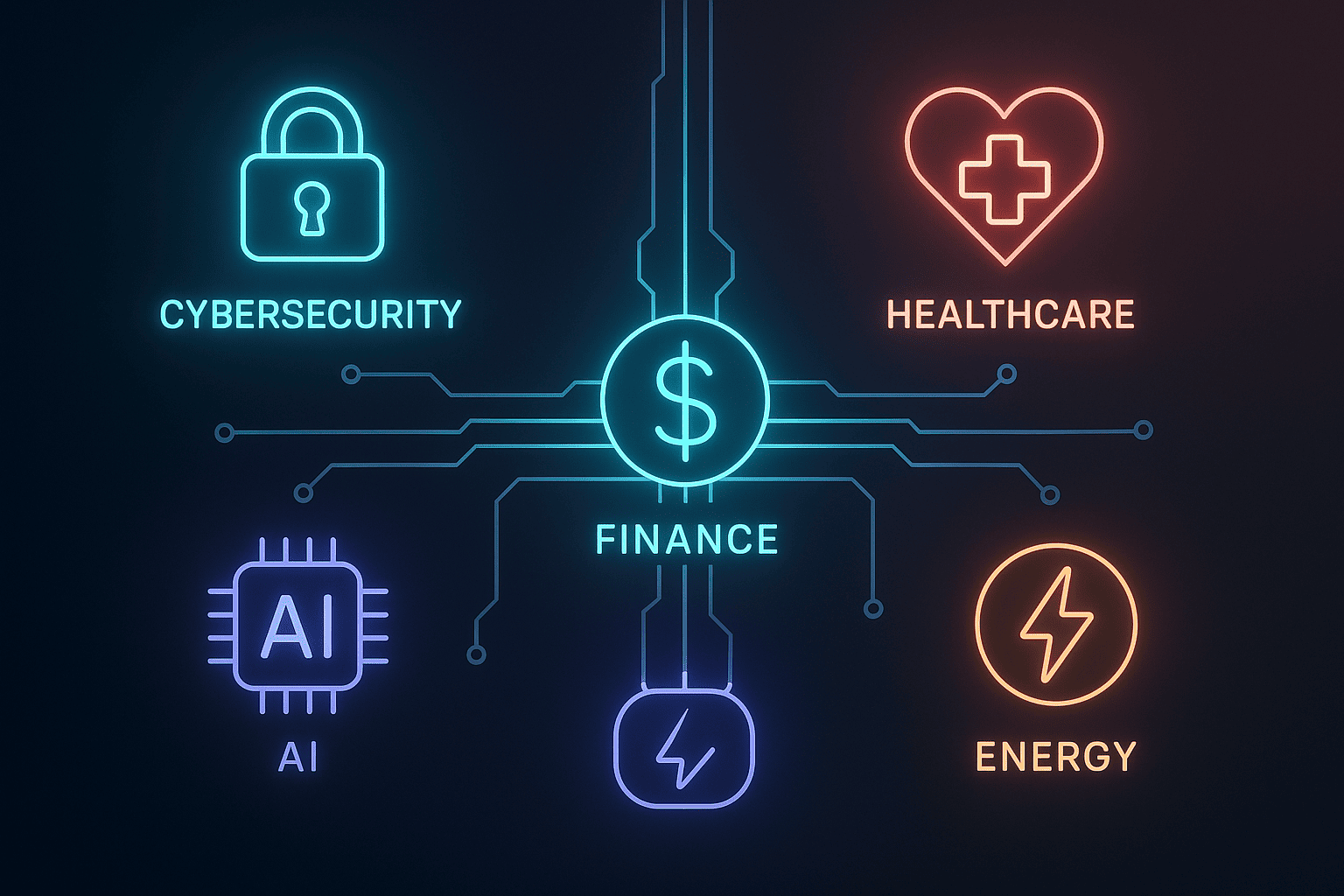
Technology is entering a new era — one where computers no longer rely only on traditional bits, but on quantum mechanics. Quantum computing is emerging as one of the most disruptive technologies of the next decade, with the potential to transform cybersecurity, AI, healthcare, finance, and national security.
As investments grow and breakthroughs accelerate, quantum computing is shifting from theoretical research to practical business impact. For organizations preparing for the future, understanding this shift is no longer optional — it is essential.
What Is Quantum Computing?
Traditional computers store data in bits (0 or 1). Quantum computers use qubits, which can be 0, 1, or both at the same time — a phenomenon called superposition.
They also use:
✔ Entanglement
Qubits become connected so that the state of one instantly affects another.
✔ Quantum Interference
Correct outcomes are amplified while incorrect ones are cancelled out.
Together, these capabilities allow quantum computers to solve certain types of problems exponentially faster than today’s machines.
This is not about replacing classical computing — it is about unlocking new computational power that was previously impossible.
Why Quantum Computing Is Accelerating in 2025
1. Significant Investments by Global Tech Leaders
Companies such as Google, IBM, Microsoft, Intel, and Amazon are investing heavily in quantum hardware and cloud-based quantum services. Governments worldwide — including the U.S., EU, and China — are funding national quantum initiatives.
2. Maturity of Quantum Hardware
We are seeing:
More stable qubits
Lower error rates
Better cooling systems
Early fault-tolerance prototypes
This progress is pushing quantum systems closer to real enterprise use-cases.
3. Rising Demand for Advanced Problem Solving
Industries need powerful systems for:
Large-scale AI training
Drug discovery
Big-data optimization
Modeling complex environments
Quantum computing is becoming the only viable option for some of these workloads.
How Quantum Computing Will Transform Industries
1. Cybersecurity
Quantum computers will be able to break today’s widely used cryptographic standards, including RSA and ECC. This creates an urgent need for post-quantum cryptography (PQC) to safeguard data.
Cybersecurity teams must begin transitioning now — the risks are long-term but real.
2. Healthcare & Drug Discovery
Quantum simulation can accelerate:
Protein modeling
Molecular design
Cancer treatment research
Personalized medicine
Research timelines could shrink from years to days.
3. AI & Machine Learning
Quantum computers can improve:
Training speed
Optimization accuracy
Pattern recognition
Large-scale model performance
The combination of AI + Quantum will create a new wave of intelligent systems.
4. Financial Services
Financial institutions can use quantum computing for:
Risk modeling
Fraud analytics
Portfolio optimization
Real-time market simulation
This provides an unprecedented advantage in speed and accuracy.
5. Energy, Climate & Manufacturing
Quantum capabilities enable better simulation of:
Battery chemistry
Carbon capture
Material design
Renewable energy optimization
These industries will play a central role in next-generation sustainability solutions.
Challenges That Businesses Should Be Aware Of
Even with its potential, quantum technology faces challenges:
Hardware instability (qubit decoherence)
High cost of development
Limited real-world applications today
Requirement for new cryptographic standards
Need for specialized quantum skills
Despite these barriers, the trajectory is clear: quantum is coming, and fast.
How Businesses Should Prepare Today
✔ Start learning and exploring early
Teams should understand the fundamentals of quantum computing and its implications.
✔ Evaluate quantum-vulnerable areas
Especially systems relying on classical cryptography.
✔ Begin planning for quantum-safe security
Explore NIST-recommended post-quantum algorithms.
✔ Experiment using Quantum-as-a-Service (QaaS)
Platforms like IBM Quantum or Google Quantum Cloud help teams build early prototypes.
✔ Partner with technology consulting firms
This ensures organizations upgrade securely, strategically, and with expert support.
Conclusion
Quantum computing represents one of the most important technological shifts of the next decade. While full maturity may still take time, the transformation has already begun in 2025. For forward-thinking businesses, now is the time to explore use-cases, strengthen security, build internal awareness, and prepare for a quantum-accelerated world.
Organizations that start today will be the leaders of tomorrow.