Cybersecurity in 2025: Why Zero Trust Is No Longer Optional
By JPStechsolutions
Introduction
Cybersecurity in 2025 isn’t just about building walls — it’s about assuming that the walls are already breached. With digital ecosystems expanding across cloud platforms, mobile devices, and remote users, the traditional “castle-and-moat” security model no longer holds up.
A single weak link — a phishing email, an unpatched API, or a compromised employee credential — can bring down entire systems. That’s where Zero Trust Architecture (ZTA) steps in: a model that assumes no user or device is trustworthy by default, no matter where it operates.
The Changing Threat Landscape
In 2025, cyber threats are evolving faster than ever:
AI-powered attacks: Hackers use machine learning to evade detection.
Ransomware 2.0: Targeting not just data but backups and supply chains.
Cloud vulnerabilities: Misconfigurations remain a top source of breaches.
Identity theft & credential leaks: Social engineering is the new entry point.
According to Cybersecurity Ventures, global cybercrime costs are expected to reach $10.5 trillion annually by 2025 — making cybersecurity the single largest business risk of the digital era.
Understanding the Zero Trust Model
Zero Trust is built on a simple principle: “Never trust, always verify.”
Instead of granting access based on network location, Zero Trust continuously validates every user, device, and transaction.
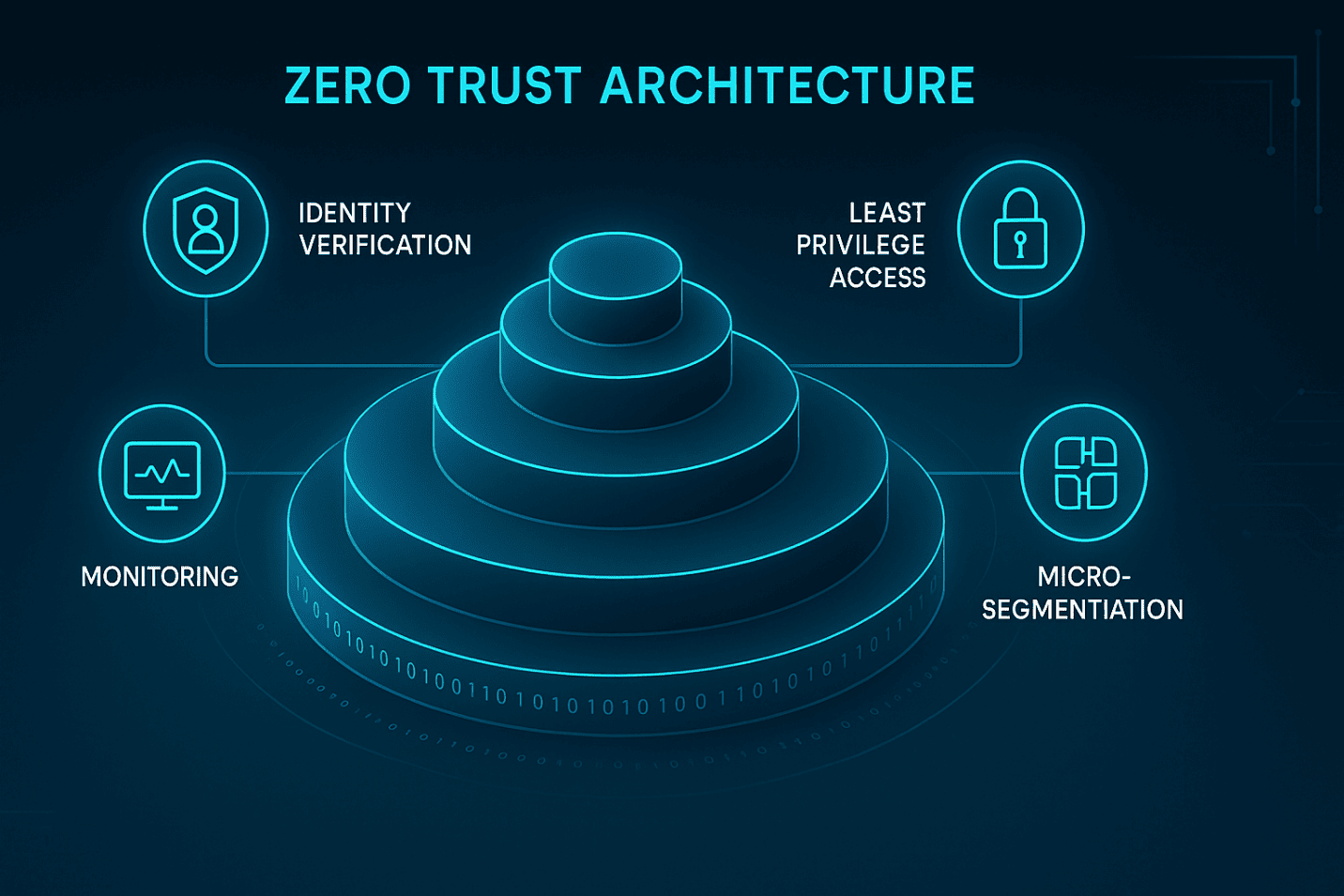
Core Pillars of Zero Trust:
1. Identity Verification – Multi-factor authentication and continuous identity checks. 2. Least Privilege Access – Users only get access to the data they need. 3. Micro-Segmentation – Dividing networks into smaller, secure zones. 4️. Continuous Monitoring – Real-time analytics and behavioral anomaly detection. 5. Data Encryption Everywhere – Securing data at rest, in transit, and in use.
Why Zero Trust Is Essential in 2025
1. Cloud Dominance Means Wider Attack Surfaces
With multi-cloud and hybrid setups, perimeters no longer exist. Zero Trust provides the dynamic, identity-based controls needed to secure these environments.
2. Remote & Hybrid Work Are Here to Stay
Employees log in from homes, coffee shops, and airports. Zero Trust validates every session — wherever it originates.
3. Compliance & Data Privacy Regulations Tighten
Laws like GDPR, CCPA, and India’s DPDP Act demand stronger data protection. Zero Trust aligns perfectly with these frameworks.
4. AI-Driven Defense Requires Data Integrity
AI security tools rely on clean, verified data streams. Zero Trust ensures that data pipelines remain uncompromised.
How Businesses Can Implement Zero Trust
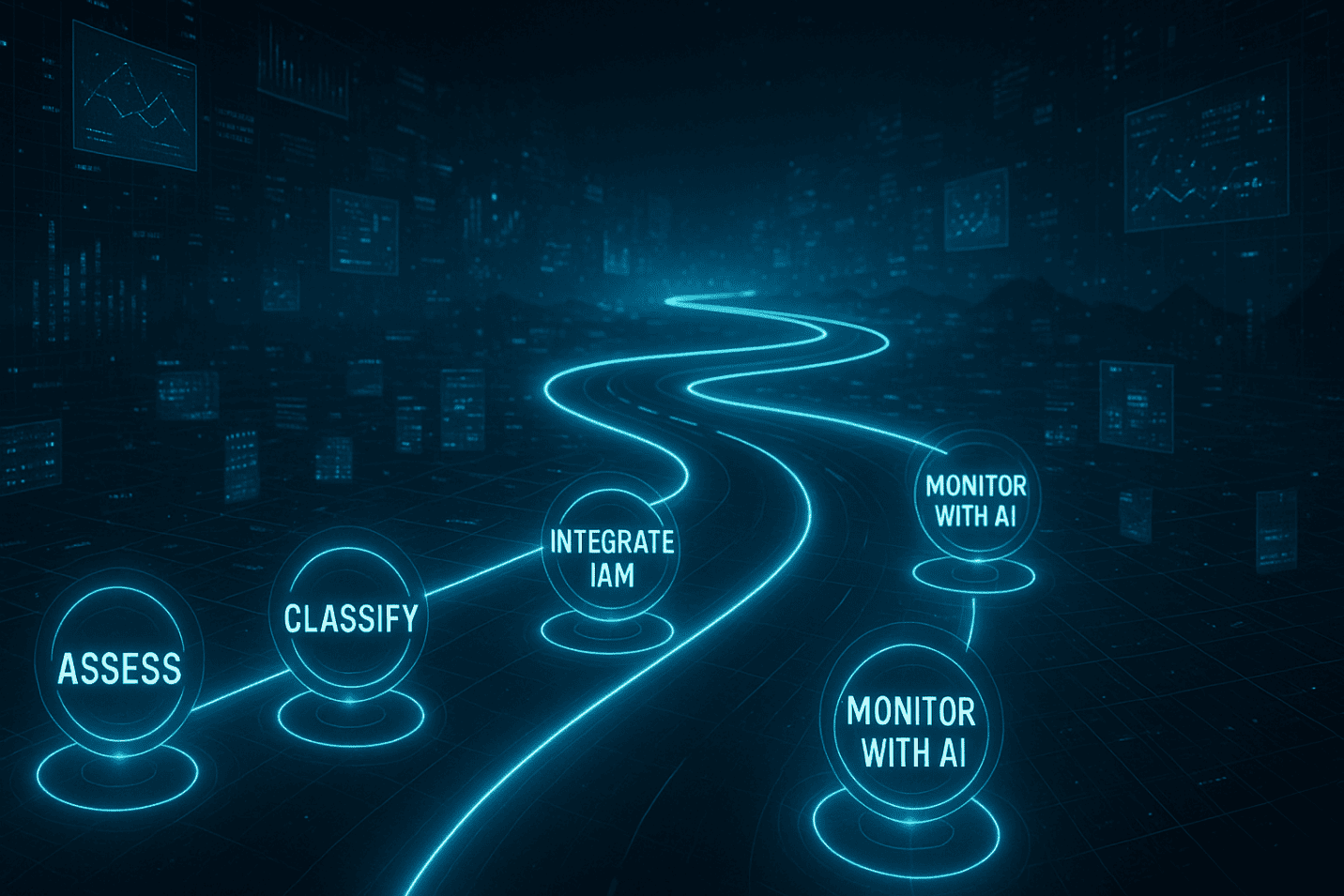
Adopting Zero Trust is a journey, not a switch. Start with clear visibility into your digital assets, then build security in layers.
1️. Assess your current security posture. 2️. Classify critical data and access roles. 3️. Integrate identity management (IAM) and MFA. 4️. Use network micro-segmentation and endpoint verification. 5️. Adopt AI-driven monitoring and threat detection tools.
Key Benefits
✅ Reduced risk of data breaches ✅ Improved visibility and control ✅ Regulatory compliance and audit readiness ✅ Enhanced customer trust and brand reputation
📊 Companies adopting Zero Trust report up to 40% fewer security incidents within the first year, according to Gartner.
Common Challenges
Complex legacy systems slow down adoption.
Initial setup and monitoring require investment.
Employee resistance without proper training.
However, with expert partners and phased execution, these obstacles can be overcome efficiently.
The Future of Cybersecurity
By 2026 and beyond, Zero Trust will evolve with AI integration, quantum-resistant encryption, and real-time adaptive security models. The future belongs to proactive defenders — not reactive responders.
Conclusion
Cybersecurity in 2025 demands more than firewalls — it demands Zero Trust thinking. In a world where breaches are inevitable, trust must be earned, verified, and constantly monitored
At JPS Tech Solutions, we help enterprises build Zero Trust frameworks tailored to their cloud, data, and compliance environments — transforming security from a checkpoint into a continuous business enabler.